
The Mediterranean Biodiversity Consortium and RESCOM at the Ramsar COP15
The Mediterranean Biodiversity Consortium (MBC) participated in the 15th Meeting of the Conference of the Contracting Parties to the Convention on Wetlands (COP15), which took place from 23 to 31 July 2025 in Victoria Falls, Zimbabwe.
On 30 July 2025, the Consortium, represented by MedWet, took part in the side event “Overseas dialogue between the Caribbean, Europe and the Mediterranean – Building skills and knowledge to address climate change through wetland-based solutions”. This event aimed to showcase how regional projects are building capacity for wetland restoration through training programs, joint monitoring, and a Community of Practice for Wetland Restoration. It promoted interregional dialogue on barriers, drivers, and enablers of restoration, highlighting governance tools, policy examples, and approaches to identify priority sites.
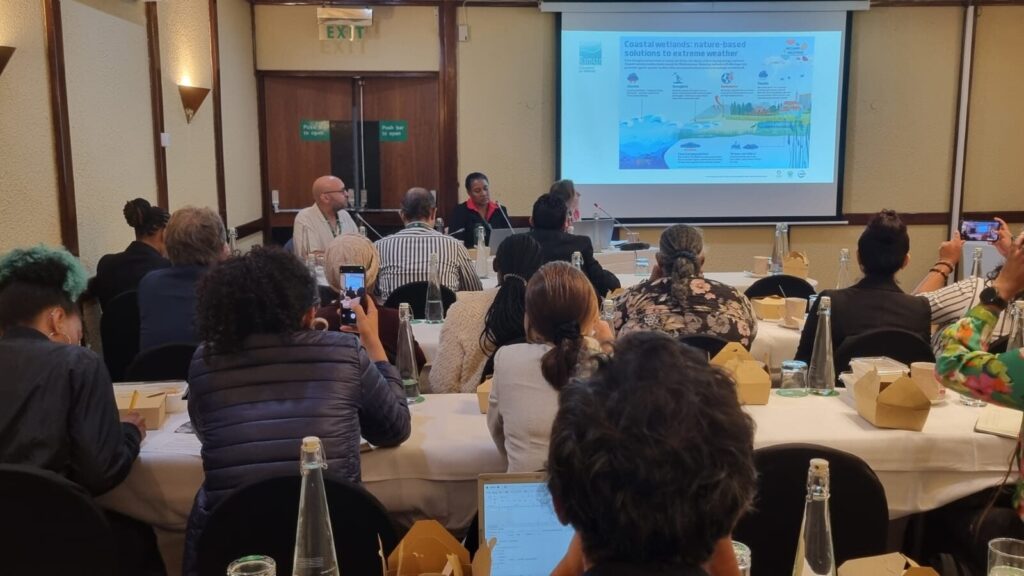
Marianne Courouble, Policy expert at MedWet, presented the RESCOM project — the first regional initiative led by the MBC, a consortium of key conservation organisations. During the event, Marianne highlighted the following features of RESCOM:
- A Mediterranean community of practice with the involvement of 9 coastal Mediterranean sites, including many wetlands.
- Capacity building modules on Nature-based solutions involving site managers.
- A Think and Do Tank currently working on the best solutions to adapt the management plan of protected areas to climate change to be applied to selected sites.
- An advocacy strategy so that regional policy better integrate risk associated to climate change and biodiversity loss and support Nature-based Solutions to better support conservation on the ground.
- An advocacy strategy aimed at influencing regional policy to better integrate risks associated with climate change and biodiversity loss, while supporting Nature-based Solutions to enhance on-the-ground conservation efforts.
In addition to the side event, contact was made with all the RESCOM pilot country focal points who attended the COP, and short interviews — which will be published soon — were conducted with most of them to gather their insights and perspectives on the project’s implementation and future steps. The side event itself attracted a full room of participants, reflecting the strong interest in regional collaboration and practical solutions for wetland restoration and climate resilience.
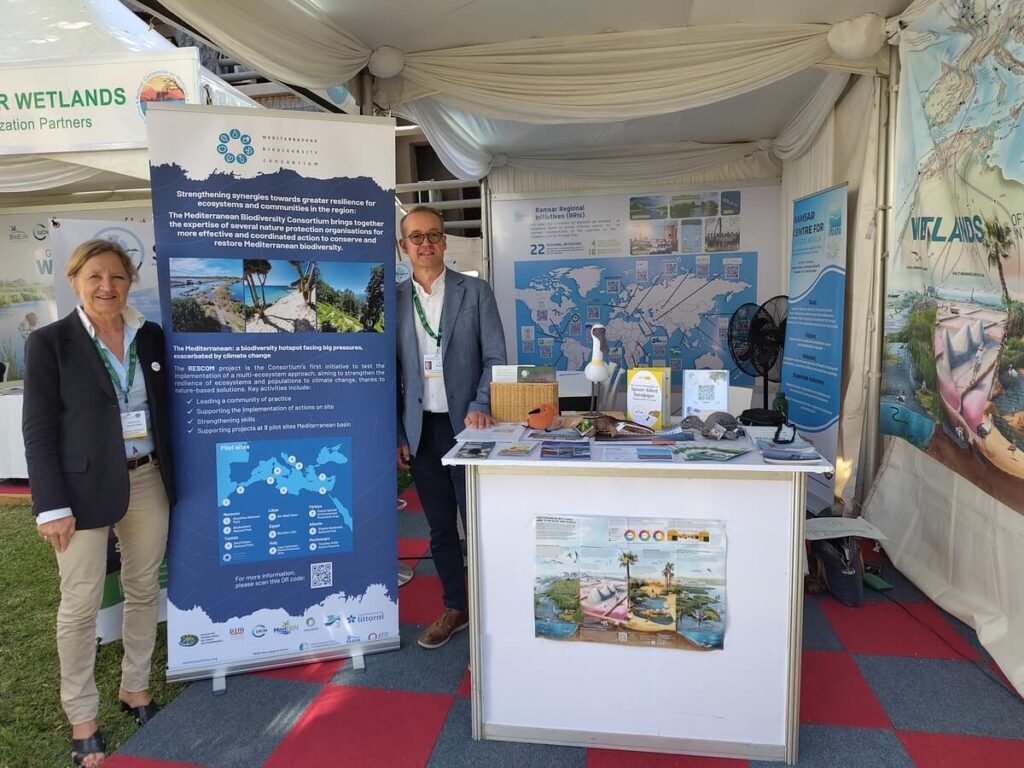
The Consortium and the RESCOM project were also represented at the Ramsar Regional Initiatives (RRIs) stand throughout the COP. A dedicated roll-up banner was displayed, presenting the RESCOM initiative, its key partners, and the nine pilot sites involved. This visibility helped raise awareness among delegates about the project’s objectives and regional impact, while reinforcing connections with other RRI members and wetland stakeholders.