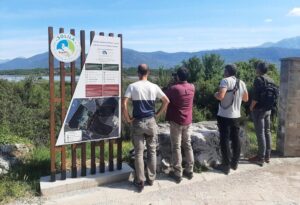


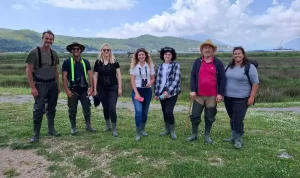
During the week of May 5, the Conservatoire du littoral was in Montenegro for an expertise mission led in collaboration with the Public Enterprise for Coastal Zone Management of Montenegro...
Read moreSurface area:
150 ha
Mediterranean Biodiversity Consortium
Surface area:
150 ha
Location:
Montenegro / municipality of Tivat
Type of natural habitats:
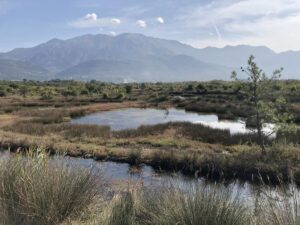
Coastal wetland
Managers:
Public Enterprise for Coastal Zone Management of Montenegro
Protection status
1979
Buffer zone of the Natural and Culturo-Historical Region of Kotor UNESCO World Heritage Site
2008
Special Nature Reserve
2009
IBA
2009
Emerald site
2013
Ramsar Site
The RESCOM project provides site managers with technical, financial, and expert support, particularly regarding the regulation of incoming and outgoing water flows, as well as the restoration of wetland-type habitats. It also aims to develop recommendations to reconcile biodiversity conservation objectives with the challenges related to public access.
“The joint expertise of specialists from the Conservatoire du littoral and the Tour du Valat has made it possible to leverage our respective skills and experience, and to provide, drawing on existing documentation and a field assessment carried out in May 2024, initial recommendations regarding the overall management of the site, additional studies to be conducted, and potential future works. A complementary mission scheduled for May 2025 will help refine these initial reflections and define the priority studies and first concrete actions to be implemented in the coming months.”
Céline Damery, Conservatoire du littoral
During the week of May 5, the Conservatoire du littoral was in Montenegro for an expertise mission led in collaboration with the Public Enterprise for Coastal Zone Management of Montenegro...
Read moreAn expert mission bringing together specialists from the Conservatoire du littoral, Tour du Valat, and AGIR Ecologique was organized from 12 to 16 May under the RESCOM project, in partnership...
Read moreA joint team from the Tour du Valat and the Conservatoire du littoral were in Montenegro to discuss the main conservation issues facing the “Tivatska Solila” special nature reserve, one of the pilot sites for...
Read moreBiologist Aleksandra Ivanovic, from the Public Enterprise for Coastal Zone Management in Montenegro, a partner organisation in the RESCOM project, explains how the actions to protect and restore this natural area, supported by RESCOM, aim to improve habitats for #biodiversity, mitigate the risk of flooding in the surrounding area, and promote collaboration with local populations.
Public Enterprise for Coastal Zone Management in Montenegro