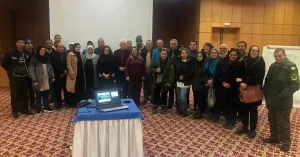
The RESCOM project, supported by the International Association for Mediterranean Forests (AIFM) and its partners in the Mediterranean Biodiversity Consortium, continues its commitment to preserving Mediterranean ecosystems in Tunisia. Recently,...
Read moreKey features
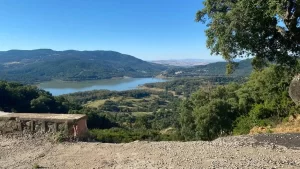
The Oued Ezzen National Park is a Tunisian ecological jewel located in a region rich in waterways, with several wadis crossing its valleys. Its dense deciduous forests, notably of Zeen oak and cork oak, host rich biodiversity, with a wide variety of plant species, including endemic ones, as well as diverse fauna (mammals, birds, amphibians).
The park provides vital ecosystem services: hydrological regulation, soil protection against erosion, carbon sequestration and timber production. It also offers opportunities for ecotourism and scientific research, while contributing to local livelihoods. Its preservation is essential for regional biodiversity and community well-being.
Main threats and pressures
- Deforestation and illegal exploitation: excessive logging.
- Overgrazing: livestock pressure hindering the natural regeneration of vegetation.
- Fires : Destruction of habitats and biodiversity.
- Fragmentation: Infrastructures isolating animal populations.
- Poaching: a threat to wildlife, particularly rare species.
- Pollution: Soil and water contamination.
- Climate change: changes in precipitation and temperature affecting ecosystems.
- Unsustainable agriculture: conversion of natural areas into agricultural land.
- Unregulated tourism: impacts on sensitive habitats.
- Lack of resources and awareness: insufficient management and protection.
About the project
RESCOM supports the co-construction of a sustainable management model for the National Park with local stakeholders, the strengthening of governance of natural areas, and the development of responsible ecotourism activities. The involvement of local communities is central to this approach, with the aim of reconciling biodiversity conservation, socio-economic development, and adaptation to climate change.
Four priorities have been identified for the Oued Ezzen National Park pilot site:
- Strengthening governance: improving consultation mechanisms between stakeholders and actively involving local communities.
- Developing and implementing the Management Plan: co-construction of an operational framework for integrated and sustainable management of the park and associated reserves.
- Developing ecotourism: identification of ecotourism circuits, enhancement of natural and cultural heritage, and creation of local economic opportunities.
- Awareness-raising and capacity-building: training of local stakeholders, environmental education, and promotion of best practices for biodiversity preservation.
The multi-ecosystem approach is reflected in the coordinated management of the Oued Ezzen National Park, the Dar Fatma Peatland Nature Reserve, and the Ain Zena Nature Reserve. This complementarity takes into account the diversity of habitats (forests, peatlands, wetlands) and their interactions. In practical terms, it guides the development of the Management and Development Plan, ecological assessments, and field actions. It promotes better ecological connectivity, an integrated vision of the territory, and more effective adaptation strategies in response to climate change and human pressures.

- Restoring and preserving biodiversity: strengthening ecosystem resilience in the face of human and climate pressures.
- Improving local governance: better planning of land use, reduced conflicts, and protection of sensitive habitats.
- Sustainable economic development: creation of ecotourism opportunities and development of local economic activities.
- Access to information and training: improving local skills for the sustainable management of resources.
- Inclusive governance model: integration of forestry services, agricultural development groups, civil society, and experts.
- Social cohesion: Promoting shared, sustainable decision-making, strengthening cohesion and conserving natural resources.
News
Launch of RESCOM project activities in Tunisia
A delegation from the Mediterranean Biodiversity Consortium (MBC), composed of members of the AIFM and Tour du Valat, participated in the first National Steering Committee of the RESCOM project in...
Read more