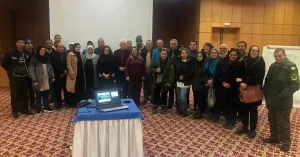
RESCOM supports the co-construction of a sustainable management model for the National Park with local stakeholders, the strengthening of governance of natural areas, and the development of responsible ecotourism activities. The involvement of local communities is central to this approach, with the aim of reconciling biodiversity conservation, socio-economic development, and adaptation to climate change.
Four priorities have been identified for the Oued Ezzen National Park pilot site:
- Strengthening governance: improving consultation mechanisms between stakeholders and actively involving local communities.
- Developing and implementing the Management Plan: co-construction of an operational framework for integrated and sustainable management of the park and associated reserves.
- Developing ecotourism: identification of ecotourism circuits, enhancement of natural and cultural heritage, and creation of local economic opportunities.
- Awareness-raising and capacity-building: training of local stakeholders, environmental education, and promotion of best practices for biodiversity preservation.
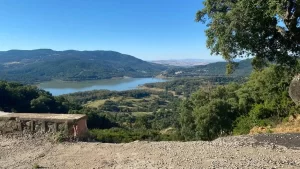
The multi-ecosystem approach is reflected in the coordinated management of the Oued Ezzen National Park, the Dar Fatma Peatland Nature Reserve, and the Ain Zena Nature Reserve. This complementarity takes into account the diversity of habitats (forests, peatlands, wetlands) and their interactions. In practical terms, it guides the development of the Management and Development Plan, ecological assessments, and field actions. It promotes better ecological connectivity, an integrated vision of the territory, and more effective adaptation strategies in response to climate change and human pressures.