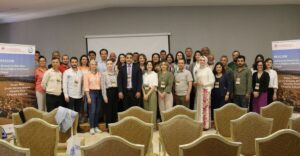
Management and action plans are the backbone of effective protected area governance. When designed collaboratively and adaptively, they become powerful tools for long-term conservation success. This is why stakeholder participation,...
Read moreKey features
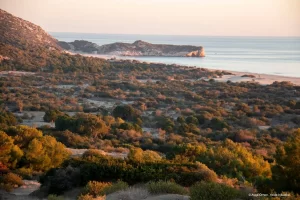
The site features a high diversity of ecosystems providing multiple ecosystem services.
- The marine areas are suitable for recreational boating and small-scale fishing.
- The coastline, particularly the dunes, hosts daily seaside recreational activities.
- The wetlands provide major habitats for birds and are popular for birdwatching activities.
- The archaeological and cultural heritage is regularly visited.
- The forested areas are used for recreational activities such as hiking and camping.
Main threats and pressures
- Touristic activities (mainly impacting coastal dunes)
- Legal/illegal coastal development.
- Accumulation of organic matter and nitrogen.
- Expansion of agricultural land.
- Plastic waste (mainly through river upstream from agricultural fields).
- Effects of climate change: increased drought and coastal erosion.
About the project
RESCOM support enables the co-creation of management and action plans for the Patara protected area through a participatory approach, in order to improve governance for the protection of coastal dunes, marine and terrestrial areas, as well as the site’s cultural heritage. By integrating Nature-based Solutions into the plans, the aim is to address societal challenges by involving local communities in biodiversity conservation, promoting balanced socio-economic development, and providing guidance for climate change adaptation.
- Restoration of coastal dunes.
- Regulation of tourism activities.
- Monitoring turtle nesting sites.
- Zonation of the marine protected area
- Regular ecological monitoring.
The implementation of Nature-based Solutions in the Patara area is based on a systemic and integrated vision and adaptive management, combined with strong local engagement. By restoring the mosaic of ecosystems and integrating traditional knowledge, the approach strengthens biodiversity and socio-economic resilience. Its feasibility and viability make it a replicable model at a larger scale along the Turkish Mediterranean coast, with strong potential for a spillover effect.

- Enhancement of biodiversity through the conservation and restoration of natural habitats.
- Reduction of ecological fragmentation and improvement of ecosystem connectivity.
- Increase in ecological resilience to the effects of climate change.
- Reduction of natural risks, particularly those linked to extreme weather events.
- Support for sustainable local livelihoods through conservation-compatible activities (e.g. ecotourism).
- Enhancement of the cultural and recreational value of the site, strengthening local attachment to the area.
- Active involvement of local communities in site governance.
- Empowerment of local stakeholders through co-design, co-development, and co-management of actions.
- Adoption of a multi-stakeholder participatory approach ensuring equitable, integrated, and context-adapted management.
News
Three-day RESCOM event at Patara Special Environmental Protected Area (SEPA), Türkiye
Within the frame of RESCOM project, the IUCN Centre for Mediterranean Cooperation and T.R. Ministry of Environment Urbanisation and Climate Change, General Directorate of Protection for Natural Assets organized a...
Read moreSupporting the implementation of RESCOM at the pilot site of Patara (Turkey)
On 5 November 2024, representatives from the Turkish Ministry of Environment, Urbanisation and Climate Change, General Directorate for Protection of Natural Assets (GDPNA), visited the IUCN Med office in Malaga,...
Read more